Thursday, August 13, 2026
24 check-insThis Week's Question
“If your normal water supply stopped right now, how long could you realistically support yourself and the people or animals who depend on you - and what would be the biggest weakness in your current water plan?”
Tonight we're talking about emergency water - storage, treatment, and building a realistic water plan for your household, your vehicle, and ARPSC deployments.
Emergency Water: Storage, Treatment & Building a Water Plan
Water Is Different From Most Preparedness Supplies
A power outage is inconvenient. Losing internet is inconvenient. Running out of potable water becomes a health problem very quickly. Water is one of the few resources we simply cannot go without for long.
A water emergency can come from many directions: power outages stopping pumping stations, water-main failures, boil-water advisories, flood or industrial contamination, treatment-plant problems, loss of a well pump, a large regional disaster - or an ARPSC deployment to an area where potable water simply isn't available.
A good water plan is more than owning a filter. A useful framework to think in is:
The goal is redundancy - several layered capabilities - rather than betting everything on one device.
How Much Water Should We Actually Store?
CDC and Ready.gov recommend storing at least 1 gallon per person per day for at least 3 days, and working toward a 2-week supply if possible. That gallon covers drinking plus some basic sanitation and cooking needs.
Remember to account for pets, children, pregnancy, medical conditions, hot weather, physical activity, and deployment needs - all of which push requirements higher.
| Household | 3 Days | 7 Days | 14 Days |
|---|---|---|---|
| 1 person | 3 gal | 7 gal | 14 gal |
| 2 people | 6 gal | 14 gal | 28 gal |
| 4 people | 12 gal | 28 gal | 56 gal |
| 4 people + pets | More than 12 gal | More than 28 gal | More than 56 gal |
This becomes a storage problem quickly. A four-person household following the 14-day guideline needs approximately 56 gallons before accounting for pets or unusually high needs - which is why larger containers, drums, and modular storage systems can make sense.
The “Step-Off Water” Concept
“Step-off water” means keeping a quantity of clean, stable potable water already stored that can immediately be consumed, loaded into a vehicle, or taken on a deployment. During the first hours of an incident, you shouldn't have to start finding and treating water - you already have some ready.
Layer 1 - Grab-and-Go
A few portable water containers already filled and ready to load.
Layer 2 - Home Reserve
Larger stored quantities for sheltering in place.
Layer 3 - Resupply
The ability to collect and treat additional water once stored supplies run low.
Water Storage Containers

Advantages: easy, inexpensive, already potable, easy to rotate.
Disadvantages: lots of individual bottles, takes space, less convenient for bulk storage.

A great example is the Reliance Aqua-Tainer , available in several sizes.
This size is the sweet spot for many members: portable, easy to put into a vehicle, manageable compared with a full drum, and it works very well as “step-off water.”
Keep in mind: 7 gallons of water weighs roughly 58 pounds - even relatively small containers get heavy quickly.
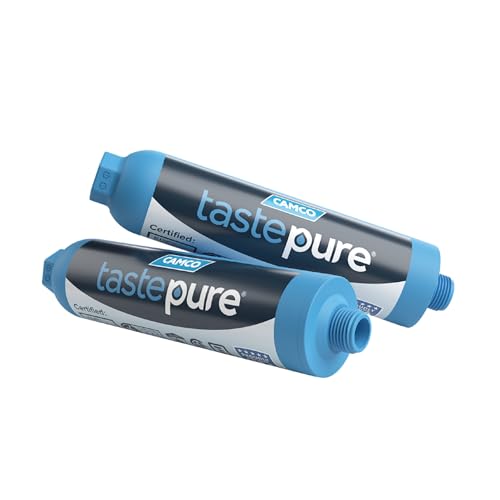
When filling: fill through an inline hose filter such as the Camco TastePURE water filter and record the source, fill date, and treatment on a band-aid-style Cana water treatment record label .

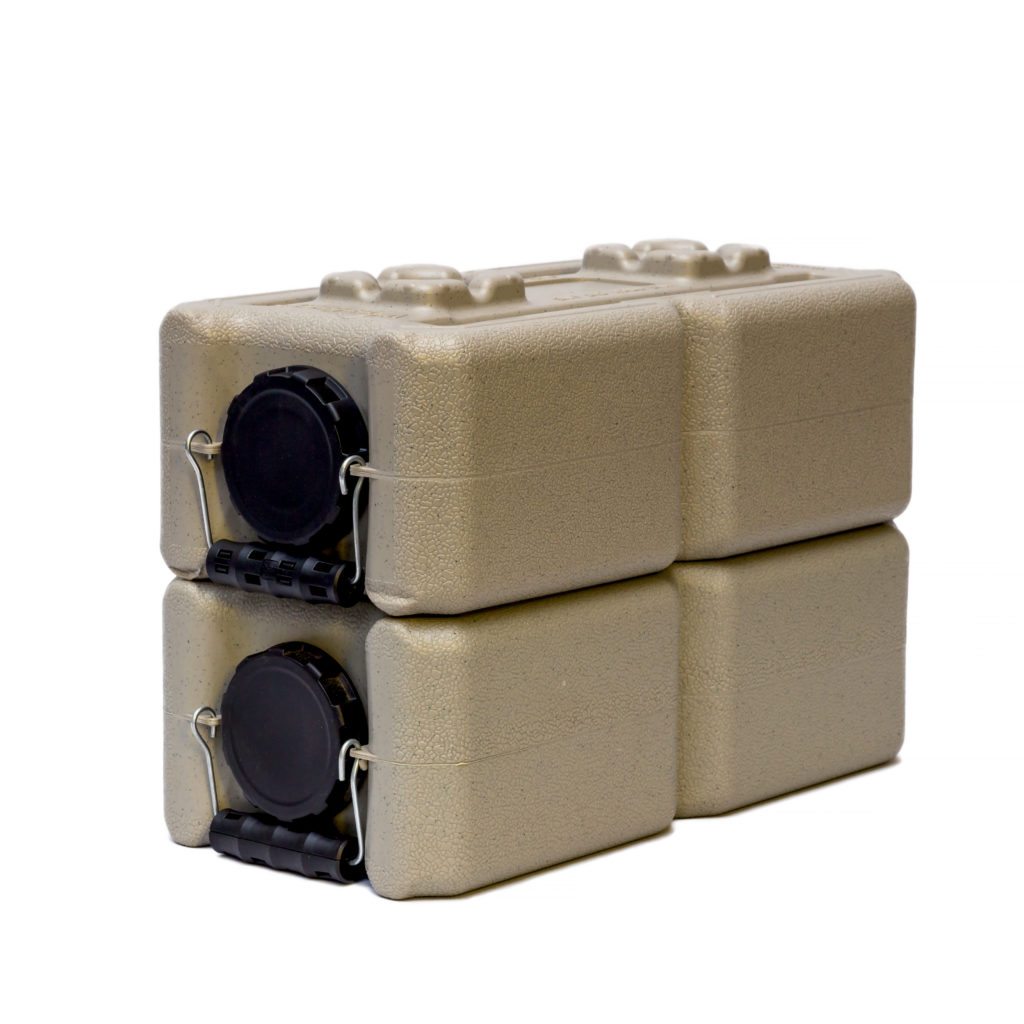
WaterBrick containers hold approximately 3.5 gallons each, are stackable, and work well where storage space is limited - closets, apartments, under beds.
The tradeoff: many smaller containers cost more per gallon, but they're much easier to move than one enormous container.
When filling: fill through an inline hose filter such as the Camco TastePURE water filter and record the source, fill date, and treatment on a band-aid-style Cana water treatment record label on each brick.
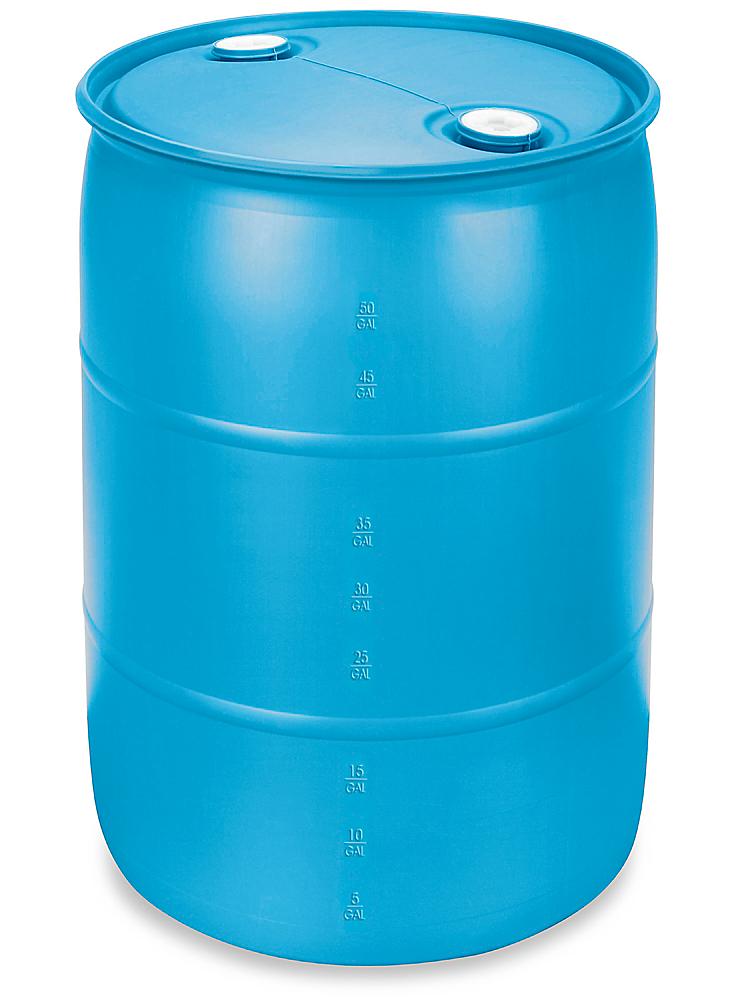
30- and 55-gallon food-grade water drums store serious quantities - but a full 55-gallon drum contains roughly 459 pounds of water before counting the drum itself. So:
- Decide where it will live before filling it.
- Do not expect to move it once full.
- Make sure the floor can support it.
- Have a pump or dispensing method available.
Example: 55-gallon food-grade water storage barrel .
When filling: record the source, fill date, and treatment on a band-aid-style Cana water treatment record label and fill through an inline hose filter such as the Camco TastePURE water filter , which attaches between a garden hose and the drum. It reduces sediment, chlorine taste, and odor going into storage - a cleaner starting point means better-tasting water at rotation time.
Only use food-grade containers intended for potable water. Never store drinking water in a drum that previously contained chemicals or unknown materials.
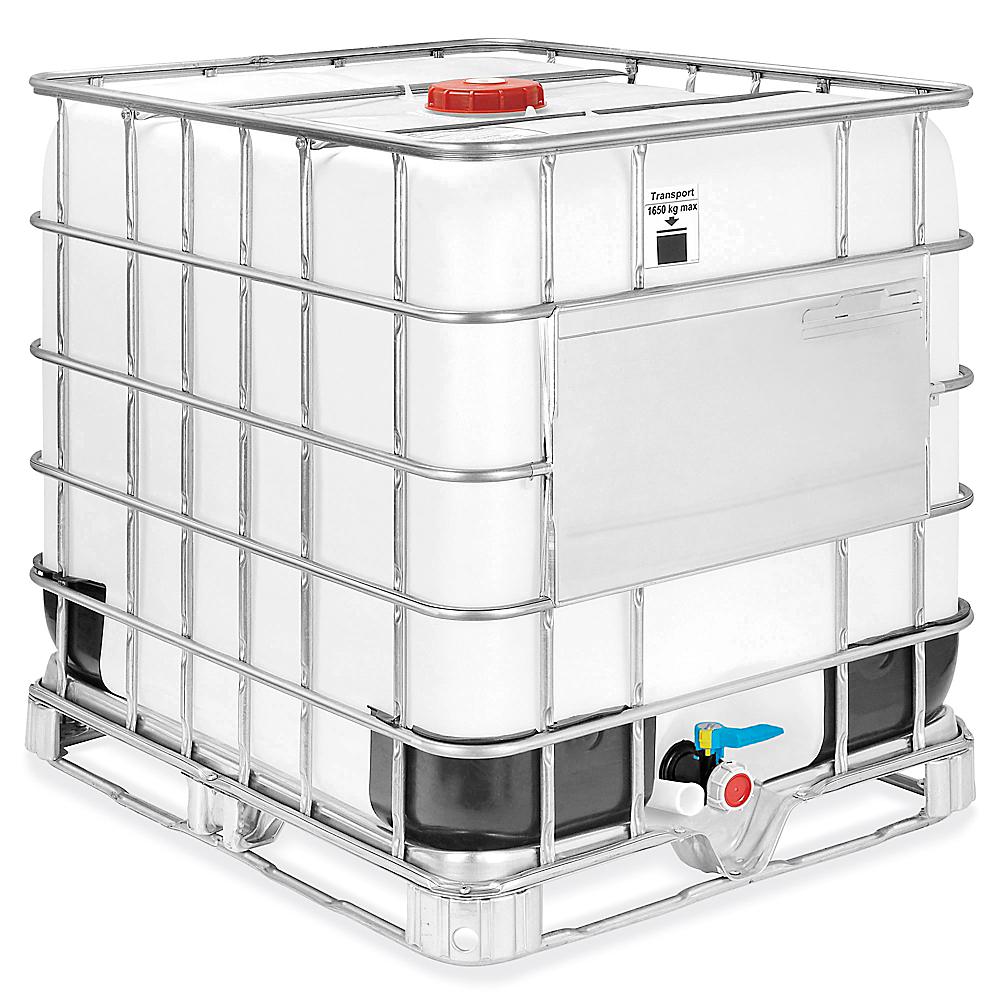
For truly large fixed storage, an IBC tank with steel pallet (275 gallon) holds roughly five 55-gallon drums' worth of water in one caged tote with a built-in valve for dispensing.
The catch: a full 275-gallon tote weighs well over a ton (roughly 2,300 pounds of water), so placement, floor loading, and access all need to be worked out before it's filled. These are best suited to a garage slab, basement floor, or outdoor pad - not an upper floor.
When filling: fill through an inline hose filter such as the Camco TastePURE water filter and record the source, fill date, and treatment on a band-aid-style Cana water treatment record label .
As with drums: only use new, food-grade totes intended for potable water - never a used tote that carried chemicals or unknown materials.

The humble 32-ounce Nalgene-style wide-mouth bottle is the workhorse of on-body water: tough, easy to clean, marked with volume graduations, and compatible with most backpacking filters, purification tablets, and UV treatment devices.
The wide mouth matters: it's easy to fill from a gravity filter or spigot, easy to drop a UV device like a Steripen into, and the standard thread size mates with many filter systems directly.
When filling from an untreated source: treat in the bottle with a UV device or chemical treatment, give the full contact time, and record the treatment on a band-aid-style Cana water treatment record label so nobody re-treats or second-guesses the bottle.

Storage Best Practices (CDC Guidance)
Stored water should be kept:
- In food-grade containers
- Tightly sealed
- In a cool location
- Away from direct sunlight
- Away from gasoline, pesticides, chemicals, and other contaminants
- Clearly labeled as drinking water
If you fill your own containers, CDC recommends replacing that water approximately every six months. Commercially bottled water can be left sealed and rotated according to the manufacturer's labeling. CDC also provides sanitation steps for cleaning reusable containers before filling them.
Filtration Is NOT the Same Thing as Purification
This is one of the most important ideas of the night. These are two different jobs, and a complete plan needs both.
Filtration
Physically removes particles and, depending on the filter, microorganisms.
Examples: sediment filters, Sawyer filters, Platypus GravityWorks, some bottle filters.
Know your micron rating: most backpacking filters go down to about 0.2 micron - small enough for bacteria and protozoa like Giardia and Cryptosporidium, but not small enough for viruses. Even a 1-micron filter misses most microbiology. Only devices sold as a “purifier” (typically around 0.02 micron) are rated to remove viruses.
Disinfection / Purification
Inactivates microorganisms that may remain in the water.
Examples: chlorine, water treatment tablets, UV treatment, boiling.
Contact time matters: chemical treatments are not instant. Depending on the chemical, the water temperature, and its clarity, it can take up to 4 hours for the chemistry to kill all viruses and make the water safe. Follow the product's wait times - drinking early defeats the purpose.
A filter that makes muddy water look crystal clear does not automatically make it safe - and chemical disinfection does not necessarily remove sediment, fuel, industrial chemicals, heavy metals, or other non-biological contamination.
Gravity Filters
For household or group use, gravity filtration lets you produce volume without manually pumping every ounce. A 4-liter Platypus GravityWorks setup is designed for exactly this, and filters like the Sawyer Squeeze are popular, compact alternatives.
Why gravity systems are useful:
- Good for producing multiple liters at a time
- Less labor than pump or squeeze filters
- Separate “dirty water” and “clean water” containers
- Useful at a fixed operating location like an EOC or shelter
Discipline matters: keep the clean side clean, never mix dirty and clean hoses, backflush the filter per manufacturer instructions, and know the limitations of your filter. Remember: these are 0.2-micron filters, not purifiers - they handle bacteria and protozoa but not viruses, so follow up with chemical, UV, or boiling disinfection when viral contamination is a concern.
H2gO Chlorine Generator

The Aqua Research H2gO Global Chlorine Disinfectant Generator uses electrolysis and ordinary salt to generate a sodium-hypochlorite disinfecting solution. Why is this interesting for emergency communications deployments?
- Very small device
- Uses ordinary salt
- USB-C rechargeable, with solar charging capability
- Treatment can scale beyond one small drinking bottle
- Provides another independent layer of redundancy
Important: the H2gO is a disinfection tool, not a filter - it does not remove particulates. Follow the manufacturer's instructions and use appropriate test strips/measurement guidance.
See also: H2gO & Steripen products and Cana's educational Water Plan page .
UV Purification / Steripen
UV devices like the Steripen use ultraviolet light to inactivate microorganisms in suitable water. The catches: the water needs to be sufficiently clear for UV treatment, UV does not physically remove dirt or chemicals, and the device requires power. Once again - layered systems win.
Water in the Vehicle
Consider keeping:
- Several bottles of water
- A portable 5–7 gallon container
- Collapsible containers
- Electrolyte packets
- A bottle/filter
- A backup treatment method
Temperature matters. Water stored inside Michigan vehicles sees serious heat and hard freezes, so think about container durability, rotating supplies, freezing expansion (leave headspace!), and not relying entirely on water permanently stored in the vehicle.
Water on Your Person
The smallest layer of the plan: a Nalgene bottle, hydration bladder, collapsible bottle, small filter, purification tablets, or a personal water-treatment kit. This layer isn't meant to support you for days - it's enough capability to get through the immediate period until you reach your vehicle, home, EOC, shelter, or another supply point.
Don't Forget the Water You Already Own
Depending on the incident, usable water may already exist in your home:
- Water heater tank - often holds dozens of gallons
- Plumbing lines
- Ice
- Stored bottled beverages
Caution: if officials indicate that contaminated water may have entered the plumbing system, water from the pipes or water heater may no longer be considered safe.
Learn now - not during an incident - where your home's main water shutoff is, how your water heater works, and how to safely obtain water from it. CDC's emergency water page (linked below) covers this.
Be Vigilant: Document Your Water
Treating water is only half the job - keeping track of what you've done to it is the other half. Once containers start moving between people, vehicles, and operating locations, it's surprisingly easy to lose track of which water came from where, how it was treated, and when.
At a minimum, every container should carry:
- The source of the water (tap, lake, rain, unknown)
- The treatment method used (filtered, chlorinated, tablets, boiled, UV)
- The date and time it was treated or filled
- Whether it's ready to drink or still needs treatment
A grease pencil or tape and marker works, but purpose-built labels make this easy - for example, the Cana Provisions Water Treatment Record Safety Label , which gives each container a standardized treatment record anyone on the team can read at a glance. In a multi-operator environment like an ARPSC deployment, that shared, consistent labeling is what keeps one person from accidentally re-treating - or drinking - the wrong water.
A Simple ARPSC Water Plan
You don't need to buy every piece of gear mentioned tonight. Here's a practical example of a complete, layered plan:
| Immediate | 10–15 gallons of potable “step-off” water |
|---|---|
| Home | Enough stored water to work toward the CDC 1 gallon/person/day recommendation |
| Mobile | Several gallons that can quickly be loaded into a vehicle |
| Treatment | One reliable filtration method |
| Purification | One independent disinfection method |
| Backup | Tablets or boiling capability |
| Knowledge | Printed instructions/data showing how each treatment method works - for example, a durable Water Data Card |
The philosophy: Water + treatment + redundancy + knowledge.
Important Weight Reality
| Water | Approximate Weight |
|---|---|
| 1 gallon | 8.3 lb |
| 5 gallons | 41.7 lb |
| 7 gallons | 58.4 lb |
| 15 gallons | 125 lb |
| 30 gallons | 250 lb |
| 55 gallons | 459 lb |
Why this matters for ARPSC: it's easy to say “I'll take 20 gallons with me,” but that's roughly 167 pounds of water. This is exactly why modular storage and pre-positioning are so important.
Resources & Further Reading
Official Guidance
- CDC - Create and Store an Emergency Water Supply The authoritative source for quantities, container sanitation, and disinfection instructions.
- Ready.gov - Water FEMA's emergency water storage and treatment guidance.
Education & Gear
- Cana Provisions - Water Plan Educational walkthrough of building a layered water plan.
- Cana Provisions - Water Treatment Resources Additional water-treatment reference material.
- H2gO Global Chlorine Generator Salt-based chlorine disinfectant generator - disinfection, not filtration.
- H2gO / Steripen Products Chemical and UV purification devices.
- WaterBrick Stackable ~3.5-gallon water containers for tight spaces.
- Reliance Aqua-Tainer Popular portable container - a great “step-off water” size.
- 55-Gallon Water Storage Barrel Food-grade bulk storage - roughly 459 lb when full, so pick its home first.
- Camco TastePURE Inline Hose Filter Attaches to a garden hose for filling drums and totes - reduces sediment, chlorine taste, and odor going into storage.
- 275-Gallon IBC Tank with Pallet Large fixed storage for serious capacity - a full one weighs well over a ton.
- Cana Provisions - Water Data Card (4" x 6") Durable, waterproof reference card covering multiple treatment methods, wait times (including cold weather), container sterilization, conversions, and warnings - so you aren't doing mental math or squinting at tiny labels under stress. A great fit for the “knowledge” layer of your plan. (Per Cana: bleach/iodine dosages follow CDC/EPA guidance and are stronger than commercial tablet products - read and follow the card's instructions.)
- Cana Provisions - Water Treatment Record Safety Label Standardized container labels for recording source, treatment method, and date - so no one double-treats or drinks untreated water.
- Platypus GravityWorks 4.0L Gravity filtration for larger volumes with less labor.
- Sawyer Squeeze Compact, versatile personal water filter.
- Big Berkey Gravity-Fed Water Filter Countertop gravity filter with purification elements - a household workhorse for daily use and extended outages.
Gear Gallery


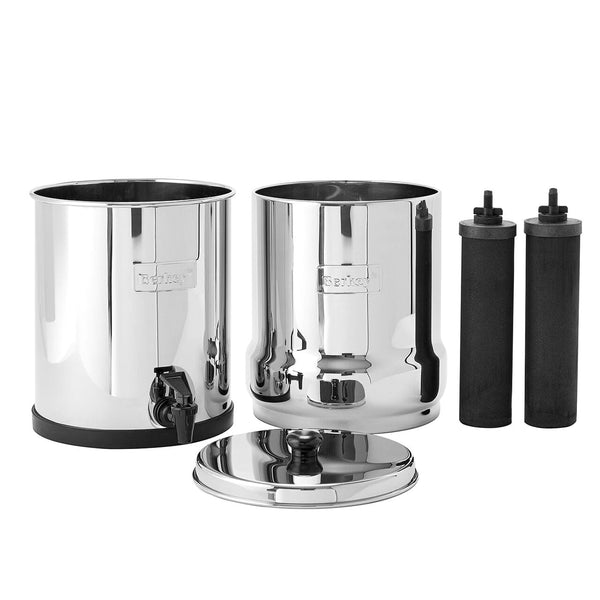
Images link to each manufacturer's product page. ARPSC has no affiliation with these vendors - they are shown as practical examples only.
A Few Things to Think About
- How many gallons of potable water are physically in your home right now?
- How many people and pets depend on that supply?
- How many days would it actually last?
- Can you move your stored water?
- Do you have water that can immediately be loaded into your vehicle?
- Can you filter additional water?
- Can you independently disinfect it?
- Do you understand the limitations of both methods?
- What happens if your preferred filter breaks?
- What happens if power is unavailable?
- Do you know where your home's water shutoff is?
- If you received an ARPSC deployment request right now, how much water would go with you?
The Real Goal
The goal is not to own every piece of water equipment out there. The real goal is to develop a water plan that fits your household, vehicle, and deployment needs - and then actually test it. Stored water buys time; the ability to filter and independently disinfect more creates endurance. Build both, keep it practical, and you'll be ready for the incident - and the deployment - when it comes.
Check-In List
| # | Call Sign | Unit # | Name | City | Member |
|---|---|---|---|---|---|
| 1 | KE8WUO | 20 | John | Warren | Member |
| 2 | N8VDZ | 2 | Mike | Warren | Member |
| 3 | W8VOX | 30 | Jon | Macomb | Member |
| 4 | N8KJV | 38 | Jason | Warren | — |
| 5 | KF8FRA | 44 | Peter | Warren | — |
| 6 | N8CAF | 26 | Cliff | Clinton Township | — |
| 7 | KC8KJO | 14 | Tom | Memphis | Member |
| 8 | KE8RUH | 43 | Anthony | Grosse Pointe Woods | — |
| 9 | W8BPD | 24 | Brian | Warren | Member |
| 10 | K8WA | 19 | Bill | Warren | — |
| 11 | AD8MP | 35 | David | Saint Clair Shores | — |
| 12 | KF8ETQ | 23 | Darren | Fraser | Member |
| 13 | KF8FQZ | 41 | Lisa | Warren | — |
| 14 | KA8UHG | 28 | Steve | Saint Clair Shores | — |
| 15 | N8HLY | 12 | Tom | Sterling Heights | Member |
| 16 | AD8OD | 21 | John | Troy | — |
| 17 | N8WCB | 6 | Dave | Sterling Heights | Member |
| 18 | K8ACW | 46 | LKP[= | Utica | — |
| 19 | KF8FGS | 32 | David | Utica | — |
| 20 | K8DJK | — | Daniel | Washington | — |
| 21 | KE8YNU | 1 | Dave | New Haven | — |
| 22 | N8WRO | 10 | Tim | Richmond | — |
| 23 | K9XOK | — | Patrick | Northbrook | — |
| 24 | N8XZ | 5 | Ron | Warren | Member |